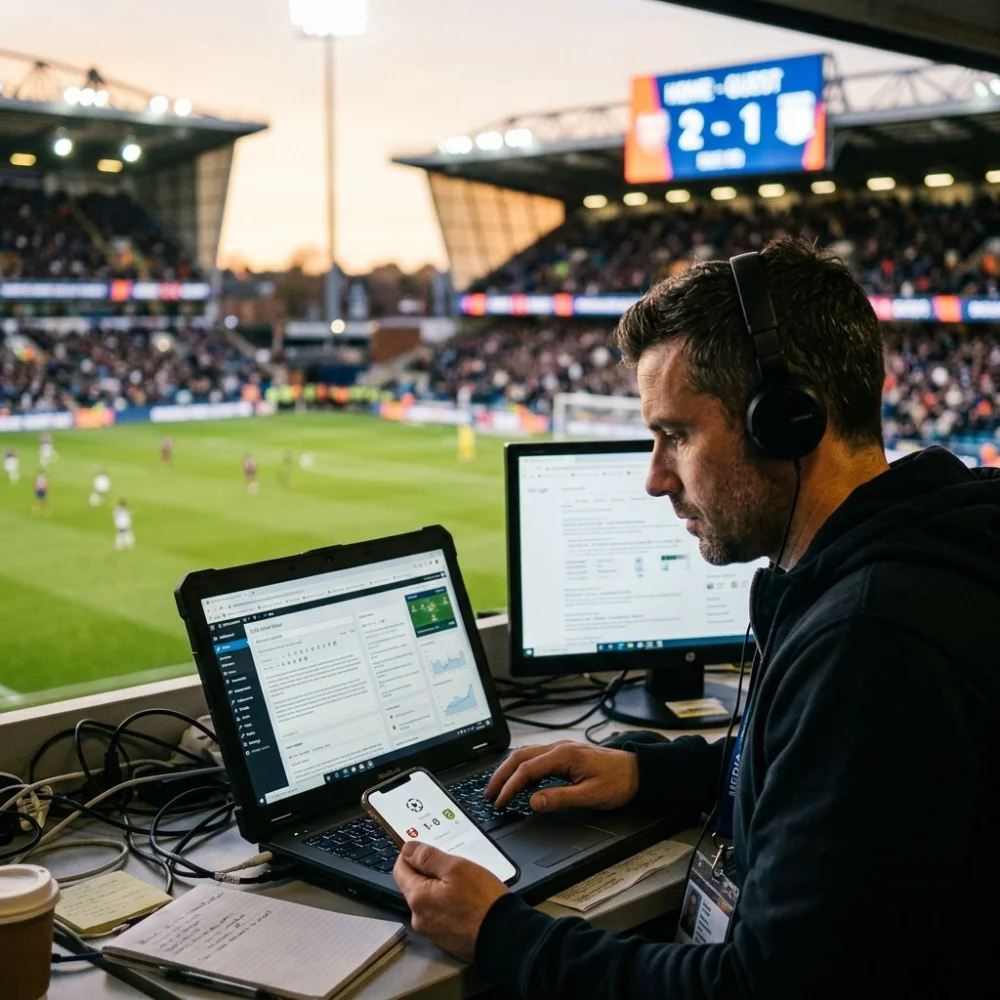
Sports fans are not patient. They check scores during the game, buy tickets on impulse, and leave any site that cannot keep up. That behaviour makes sports website design one of the most demanding jobs in web development.

Five years ago, a sports website was basically a brochure. It told you who the organisation was, where it was located, and how to get in touch. The best ones had a news section that was updated sometimes. That standard is no longer enough.

Here is what you need to build a good sports website in 2026.

1. Speed Is Not Optional

The baseline expectation for any sports website in 2026 is simple: it must be fast, it must work perfectly on a mobile device, and it must be reliable. These are not extras. They are requirements.

The numbers tell the story. Bounce probability jumps 32% when load time goes from 1 to 3 seconds. At 5 seconds, the bounce rate hits 38%. The BBC found it loses 10% of visitors for every extra second of load time. For a site pushing live scores during a big match, that math gets ugly fast.

A very slow site also gets penalised by Google in search rankings. It loses registrations because people give up during sign-up. It hurts your credibility with sponsors who check your digital presence.

The good news? Modern website platforms, used with well-optimised assets and good hosting, can deliver excellent performance without ongoing technical work.

2. Mobile First, Always

Most sports fans access websites on their phones. Parents check fixtures. Players check schedules. Officials check assignments. Supporters check results.

StatCounter reported that mobile devices accounted for 62.54% of global website traffic in Q4 2024. For sports, the number is even higher. Fans check scores on their phone while watching a game on TV. Some are at the stadium pulling up stats on mobile data.

A mobile-first design is not a nice extra. It is the starting point. Desktop layouts come second, if they come at all.

Here is what to focus on for mobile:

  • First Contentful Paint under 1.8 seconds
  • Largest Contentful Paint under 2.5 seconds
  • Cumulative Layout Shift under 0.1
  • Navigation that works with a thumb on a vertical screen

3. Personalisation for Different Users

The next big step for sports websites is personalisation. That means showing different content to different visitors based on who they are and what they have done before.

A junior player should see different content than a senior competitive athlete. A new member should see a different experience than a ten-year life member. A parent looking to sign up their child should see a different journey than a current coach looking for training resources.

This is not science fiction. The technology exists and is becoming easier to use. Organisations that start building the data and content systems for personalisation now will be ahead of those that try to add it later.

4. Connect Everything Together

The sports website of 2026 is not a standalone channel. It is the front door to a connected system that includes registration, communication, event management, and community spaces.

When a member registers, their profile should appear across all connected systems. When they log in, they should see their membership status, upcoming events, team fixtures, and content relevant to them. When they interact with an email or social post, that behaviour should inform what they see on the website next time.

Organisations that have made this investment report higher member satisfaction, lower dropout rates, and stronger commercial performance.

For Irish clubs and associations, this means integrating with systems like SportLoMo, which can push fixtures, results, and standings to your website automatically.

5. Features Fans Actually Want

Based on analysis of over 100 successful sports team websites, here are the must-have features for 2026:

  • Live Score Updates: 92% of fans consider this the most important feature
  • Team Roster Profiles: Individual player pages with stats and bios
  • Match Schedule: Upcoming games with ticket purchase options
  • News Section: Regular updates about team activities
  • Photo/Video Gallery: Visual content from games and events
  • Mobile-Friendly Design: 64.95% of fans access team websites on mobile

Fans today want more than static text scores. If they land on your page and all they see is “Team A 1, Team B 0,” they are gone in three seconds. They want expected goals (xG), player ratings in real time, and a “live companion” experience.

Interactive widgets like live match trackers and automated commentary can keep fans on your site without burning out your editorial team.

6. Design the Homepage for Strangers

Most sports websites are designed with existing members in mind. The problem is that existing members are not the homepage’s main audience. New people who know little about the organisation are.

A good sports homepage answers five questions within the first ten seconds:

  1. What is this organisation?
  2. Who is it for?
  3. What does it offer?
  4. Where does it operate?
  5. What should I do next?

If a complete stranger cannot answer all five without scrolling or clicking away, the homepage needs work.

7. Make Registration Easy

The registration or sign-up process is the most important conversion flow on any sports website. It is also the most often neglected.

Common problems include:

  • Registration links buried in menus
  • Forms that redirect to another platform with no visual connection
  • Processes that ask for too much information upfront
  • No confirmation or follow-up after registration

Every extra step costs you conversions. Map the entire process from the moment a visitor lands to the moment they get confirmation. Find every point where someone might give up and remove as many as possible.

8. Use Social Proof

People trust other people more than they trust organisations. Testimonials, member stories, and case studies are powerful conversion tools, and most organisations underuse them.

A specific testimonial works better than a generic one. A quote from a parent saying their child gained confidence and made friends through your junior programme is more convincing than a five-star review. Place testimonials close to your main calls to action.

9. Optimise for Search

A website that nobody finds cannot convert anyone. Basic on-page SEO means:

  • A unique title tag for each page with relevant keywords
  • A meta description that encourages clicks
  • Content that naturally answers what someone searching for your sport in your area would want to know

Local SEO is especially important for community clubs and regional associations. Include your location in your content.

For match pages, use stable URLs like /football/epl/arsenal-vs-chelsea-2026-03-05 so search engines see them as permanent pages rather than changing endpoints.

10. Content That Earns Traffic

The websites getting the most organic search traffic are not those with the prettiest design. They are those with the most genuinely useful, well-structured content.

Educational content works well. Think coaching resources, player development guides, or match analysis. Sports fans want data. They want expected goals, advanced player statistics, and real-time updates.

Automated tools can help. LiveCommentary takes raw data and turns it into natural-sounding play-by-play text. It recognises goals, close misses, VAR checks, yellow cards, and more, and writes them out instantly. This keeps your site fresh without overworking your staff.

11. Security Matters

Protect your site with:

  • An SSL certificate
  • Two-factor authentication
  • Strong password policies
  • A Web Application Firewall
  • DDoS protection
  • Regular security audits
  • Regular backups

12. Track Your Performance

Monitor these key metrics:

  • Average session duration
  • Pages per session
  • Bounce rate by section
  • Server response time
  • Page load speed
  • Resource usage

Use this data to find problems and fix them.

The Takeaway

A good sports website in 2026 is fast, works on mobile, and gives fans what they want right away. It connects registration, fixtures, and content into one system. It personalises the experience for different users. And it converts strangers into members.

The organisations that invest in these things now will be the ones that grow their membership, keep their fans happy, and attract sponsors.

Ready to build your sports website?
Talk to a specialist who understands sports website In Ireland

[Start your project today]

Thinking of starting a casino blog? Good idea. Casino blogs can make money from ads or affiliate links. But most fail because they copy others. Here is how to do it right, step by step.

Step 1: Pick Your Focus

Do not write about everything. Pick one thing. Examples:

  • Irish online slots only
  • Live dealer games
  • Casino bonuses in Ireland
  • Betting tips for horse racing and football

A tight focus brings loyal readers. General blogs get lost.

Step 2: Choose a Blog Name and Platform

Pick a short name. Easy to remember. Include a casino word if you want, like “Spin” or “Bet.” Avoid long or odd names.

For platform, use WordPress. It is free to start. You buy a domain later. WordPress handles the tech stuff. Other platforms ban casino content. WordPress does not. Good example to copy – Vivatbet casino blog

Step 3: Get Hosting That Allows Gambling

Many hosting companies say no to casino blogs. Check their rules first. Good options that allow gambling content:

  • Hostinger
  • Namecheap
  • KnownHost

Do not use GoDaddy or Bluehost for casino blogs. They shut sites down.

Step 4: Write Real Posts, Not Filler

Most casino blogs are trash. They copy game rules from Wikipedia. Do not do that. Write what players actually want:

  • “Best bonus offers this week in Ireland”
  • “How to spot a rigged slot game”
  • “My 50 euro challenge – results after 10 casinos”

Add your own losses and wins. People trust real stories. Use short sentences. One idea per paragraph. No fluff.

Step 5: Get Affiliate Links

You make money when someone clicks your link and joins a casino. Top affiliate programs for Irish traffic:

  • Bet365 Affiliates
  • LeoVegas Partners
  • ComeOn! Affiliates

Sign up after you have 5 to 10 blog posts. New blogs get rejected. Show them you are serious.

Step 6: Drive Traffic Without Paid Ads

Do not buy Google Ads. Gambling ads cost too much. Do this instead:

  • Write posts answering questions like “best payout slots Ireland” – that is SEO.
  • Share your posts in Irish gambling groups on Facebook and Reddit.
  • Make short videos of your slot play and link to your blog in the bio.

One good post can bring 500 visitors a month for free. Ten such posts bring 5,000.

Step 7: Stay Out of Legal Trouble

Irish gambling law is clear. You can write about casinos. You cannot:

  • Pretend to be a casino
  • Give betting advice to under-18s
  • Promise guaranteed wins

Put a disclaimer on every page. Say “This blog is for 18+ only. Gambling carries risk.” That covers you.

Step 8: Update Old Posts

Casino offers change fast. A bonus from June may be dead in August. Go back to old posts every month. Update links and dates. Google ranks fresh content higher. Five minutes of updates can double your traffic.

How Long Until You Make Money?

First month: zero euro. That is normal. Month three: maybe 100 to 300 euro from affiliates. Month six: if you have 20 good posts, 500 to 1,000 euro is possible. After one year, some casino blogs make 3,000 to 5,000 euro a month.

But most quit in month two. Do not quit.

Final Tip – Be Honest

Do not recommend bad casinos just for a quick commission. Your readers are not stupid. If you push a slow-pay casino, they will leave and never come back. Recommend only casinos you would use yourself. That builds a real brand. And a real brand pays for years.

Now go start. Pick your name today. Write your first post tonight. One step at a time.

Betting sites are big business. Millions of people place bets on sports, horse racing, and virtual games every day. But building a betting site is not like building a normal website. It needs special software, strict security, and a deep understanding of the law. If you want to launch your own betting site, here is how the process works from start to finish.

1. Understand the Law First

You cannot just open a betting site and start taking bets. Gambling laws are strict in most countries. You must follow the rules or face huge fines.

  • Get a License: You need a license from a gambling authority. Popular choices include Malta, Gibraltar, Curacao, and the UK Gambling Commission. Each has different costs and rules.
  • Know Where You Can Operate: Your license decides which countries you can accept players from. Some licenses are cheap but fewer players trust them. Others are expensive but open bigger markets.
  • Hire a Lawyer: Talk to a lawyer who knows gambling law. They help you avoid mistakes that could shut you down.

2. Choose Your Business Model

Betting sites make money in different ways. Decide how you want to operate.

  • Sportsbook: Take bets on real sports like football, horse racing, and tennis. You set the odds and pay winners.
  • Exchange: Players bet against each other. You take a small cut of each bet.
  • White Label: Buy a ready-made site from a provider. You add your logo and start faster, but you pay fees and share profits.
  • Turnkey: Build everything yourself. It costs more and takes longer, but you own everything and keep all profits.

3. Pick Your Software Provider

Unless you build everything from scratch, you need a software provider. They give you the platform that runs your site.

  • Look for Features: Good software includes odds management, player accounts, payment systems, and reporting tools.
  • Check Reliability: The software must handle thousands of players at once without crashing.
  • Ask About Customization: Can you change the look and feel? Can you add your own logo and colors?
  • Popular Providers: Companies like BetConstruct, SoftSwiss, and EveryMatrix offer betting platforms.

4. Set Up Odds and Risk Management

Odds decide how much players win. Getting odds right is hard. If you set them wrong, you lose money.

  • Get Odds Feeds: Most sites buy odds from data providers. They send updates in real time so your odds match the market.
  • Manual Trading: Some sites hire traders to adjust odds during big events.
  • Risk Management: You need tools that spot smart players who might cost you money. Limit their bets or close their accounts if needed.

5. Build or Buy the Front End

The front end is what players see. It must be fast, clean, and easy to use.

  • Homepage: Show popular sports, live events, and big upcoming games.
  • Bet Slip: Players add selections here. It updates instantly and shows potential winnings.
  • Live Betting: Many players bet on games while they play. This needs fast updates and smooth design.
  • Mobile First: Most bets come from phones. Your site must work perfectly on small screens.

6. Add Payment Systems

Players need to put money in and take money out. Your payment system must be safe and easy.

  • Multiple Options: Offer cards, e-wallets like Skrill and Neteller, and bank transfers.
  • Cryptocurrency: Many betting sites now accept Bitcoin and other coins. It is fast and private.
  • Fast Payouts: Players hate waiting for their money. Process withdrawals as fast as you can.
  • Security: Use strong encryption to protect financial data.

7. Set Up Player Accounts

Every player needs an account. You must track their bets, balance, and history.

  • Registration: Make sign-up simple. Ask for name, email, and date of birth.
  • Verification: Check IDs to stop underage gambling and fraud.
  • KYC Checks: Know Your Customer rules require you to verify player identities. Build systems that check documents fast.
  • Account Limits: Let players set deposit limits and time limits to gamble responsibly.

8. Add Bonuses and Promotions

Bonuses attract new players and keep existing ones happy.

  • Welcome Bonus: Match the first deposit. Give free bets or extra cash.
  • Free Bets: Offer a free bet when players sign up or refer a friend.
  • Reload Bonuses: Give bonuses on second and third deposits.
  • Loyalty Programs: Reward regular players with points they can trade for cash or free bets.
  • Wagering Requirements: Set rules that stop players from cashing out bonus money without betting first.

9. Build Customer Support

Players will have questions. They might forget passwords or have trouble depositing. You need to help them fast.

  • Live Chat: Add chat so players can talk to support right away.
  • Email Support: For slower questions, use email.
  • FAQ Section: Build a page where players find answers without waiting.
  • 24/7 Coverage: Bets happen all day and night. Your support should too.

10. Test Everything

Before you launch, test the whole site. Bugs ruin trust and cost money.

  • Function Testing: Check every button and link. Place test bets. Try withdrawals.
  • Load Testing: Simulate thousands of players at once. Make sure the site stays fast.
  • Device Testing: Test on iPhones, Android phones, tablets, and computers.
  • Browser Testing: Check Chrome, Safari, Firefox, and Edge.

11. Get Your Site Certified

Licenses require independent testing. Labs check that your site is fair and secure.

  • Send to Test Labs: Companies like GLI or iTech Labs review your systems.
  • Check RNG: If you have casino games, they test the random number generator.
  • Check Security: They look for holes that hackers could use.
  • Get Approval: Once you pass, you get certificates. Regulators need these before you launch.

12. Market Your Site

A great site means nothing if no one visits. You need players.

  • Affiliate Programs: Pay websites and influencers to send players your way.
  • Search Ads: Buy ads on Google for betting keywords.
  • Social Media: Post on Twitter, Facebook, and Instagram. Share tips and promotions.
  • Sponsorships: Sponsor teams or events to build brand recognition.
  • Bonuses: Use strong welcome offers to beat competitors.

13. Monitor and Improve

Launch is just the start. Watch how your site performs and fix problems fast.

  • Track Data: See which sports get the most bets. Which pages do players visit?
  • Player Feedback: Read what players say. Fix things they complain about.
  • Update Odds: Keep odds competitive. If yours are worse than rivals, players leave.
  • Add Features: Listen to what players want. Add new sports, new payment methods, or new bet types.

The Takeaway

Building a betting site is a big project. It takes money, time, and expert help. You need to understand the law, choose good software, and build a site players trust. But if you do it right, a betting site can make money for years.

Ready to build your betting site?
Contact us to talk about your project. We help with software, design, payments, and certification. You focus on growing your player base.

The online casino industry is one of the fastest-growing sectors on the web. Millions of players log in every day to play slots, poker, blackjack, and live dealer games. But behind every successful casino site is a team of developers who built it to be fast, secure, and easy to use.

Building a casino website is not like building a standard business site. It comes with specific rules, technical needs, and security risks. If you are looking to launch an online casino, or if you need to upgrade your current site, here is what you should know about casino website building services.

1. Security Comes First

Online casinos handle two things that criminals want: money and personal data. Your site must be a fortress.

  • SSL Encryption: Every casino site needs strong encryption. This scrambles data so hackers cannot steal it. Players need to know their bank details and passwords are safe.
  • Firewalls: We set up advanced firewalls that block attacks before they reach your site.
  • DDoS Protection: Some attackers try to flood your site with traffic to shut it down. We build protection that absorbs these attacks and keeps your site online.

2. Licensing and Compliance

You cannot just launch a casino site and start taking bets. You need a license from a gambling authority. Different countries have different rules.

  • Age Verification: Your site must check that players are old enough to gamble. We build systems that verify age and ID before anyone can play.
  • Location Blocking: Some licenses only allow you to operate in certain countries. We set up geo-blocking to stop players from places where you are not licensed.
  • Responsible Gambling Tools: Good casino sites let players set limits on how much they spend. We add features like deposit limits, time limits, and self-exclusion options.

3. Game Integration

A casino is nothing without games. But you do not need to build the games yourself. You can buy them from game providers and add them to your site.

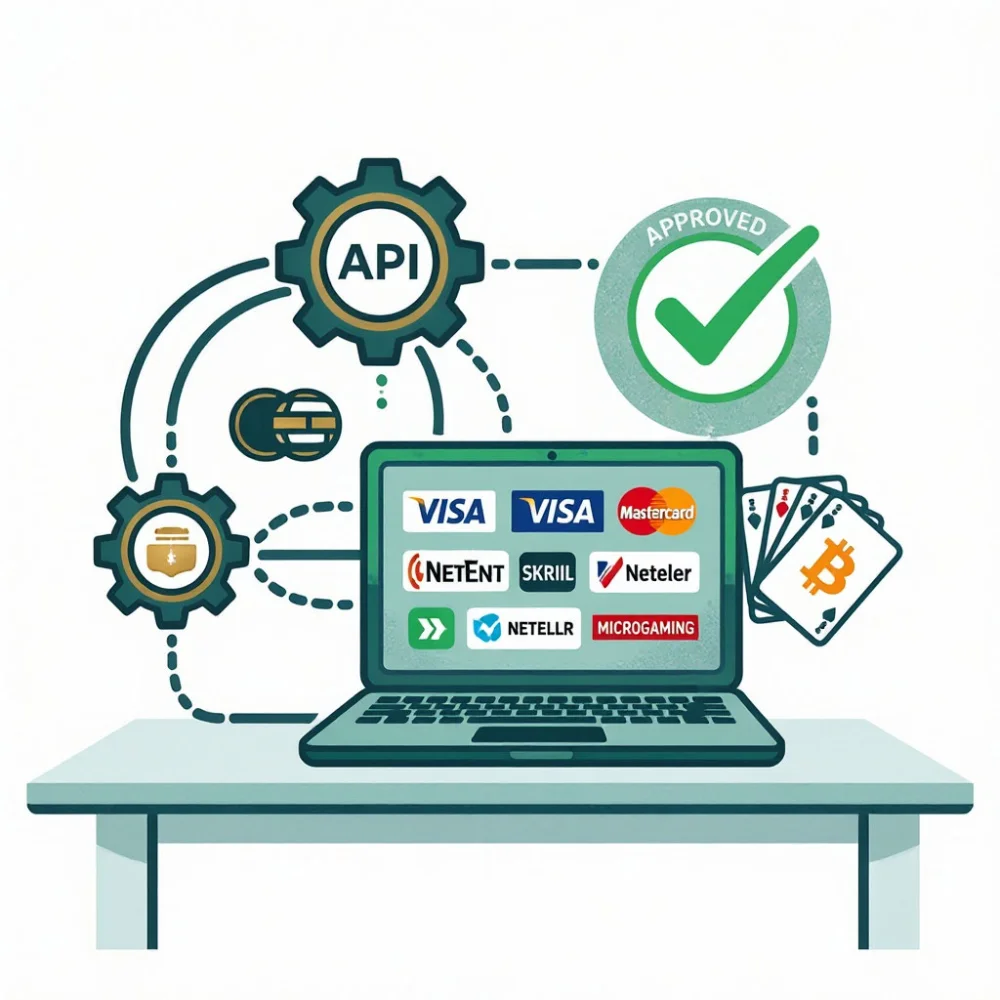
  • API Connections: We connect your site to game providers like NetEnt, Microgaming, or Playtech. Their games run on their servers but appear on your site.
  • Game Categories: We organize games into easy-to-find categories: slots, table games, live casino, jackpots.
  • Search and Filters: Players want to find their favorite games fast. We add search bars and filters for game type, provider, or popularity.

4. Payment Systems

Casino players need to put money in and take money out. Your payment system must be smooth and trustworthy.

  • Multiple Options: We add support for credit cards, debit cards, e-wallets like Skrill and Neteller, and even cryptocurrency like Bitcoin.
  • Fast Withdrawals: Players hate waiting for their money. We build systems that process withdrawals quickly and automatically when possible.
  • Currency Support: If you want players from different countries, we set up multi-currency support so they can play in euros, dollars, or pounds.

5. Mobile First

Most casino players today play on their phones. Your site must work perfectly on small screens.

  • Responsive Design: We build sites that adjust to any screen size. Buttons are big enough to tap. Text is easy to read.
  • Touch Controls: Slots and table games need touch controls that feel natural on a phone or tablet.
  • App or Browser?: Some operators want a native app from the Apple or Google stores. Others prefer a browser-based site that works anywhere. We help you choose the right path.

6. Bonuses and Promotions

Casinos compete for players with bonuses. Your site needs tools to manage these offers.

  • Welcome Bonuses: We build systems that automatically match a new player’s first deposit.
  • Free Spins: Give away free spins on popular slots to attract players.
  • Loyalty Programs: Reward players who keep coming back with points they can trade for cash or free plays.
  • Wagering Requirements: We set up rules that track how many times a player must bet before they can withdraw bonus money.

7. Speed and Performance

Casino players are impatient. If your site is slow, they leave and go to a competitor.

  • Fast Loading Times: We optimize images and code so pages load in under two seconds.
  • Scalable Servers: When you run a big promotion, traffic spikes. We build sites that handle thousands of players at once without crashing.
  • Content Delivery Networks: We use CDNs to serve your site from servers close to your players, making it faster no matter where they are.

8. Fair Play and Randomness

Players need to trust that your games are fair. Casino games use random number generators (RNGs) to decide outcomes.

  • Certified RNGs: We help you integrate RNGs that are tested and certified by independent auditors.
  • Provably Fair: Some casinos, especially crypto casinos, use “provably fair” technology. This lets players check that the game result was not rigged.

9. Customer Support Integration

Players will have questions. They might forget a password or have trouble with a deposit. Your site needs to connect them to help fast.

  • Live Chat: We add live chat so players can talk to support right away.
  • FAQ Sections: We build knowledge bases where players can find answers without waiting for a human.
  • Ticket Systems: For bigger issues, we set up ticket systems that track problems until they are solved.

10. Analytics and Reporting

You need to know how your casino is performing. We build dashboards that show you the numbers.

  • Player Tracking: See how many players sign up, how much they deposit, and which games they play.
  • Revenue Reports: Track your income, player winnings, and bonus costs.
  • Conversion Funnels: See where you lose players. Is it at sign-up? At deposit? Fix the weak spots to make more money.

The Takeaway

Building a casino website is a big job. It requires strong security, legal knowledge, and technical skill. But with the right team, you can launch a site that players trust and enjoy.

If you are ready to start your project, we can help. We handle the hosting, the security, the game integrations, and the payments. You focus on marketing and growing your player base.

Ready to build?
Contact us today to talk about your casino website. We will walk you through the process and answer all your questions.

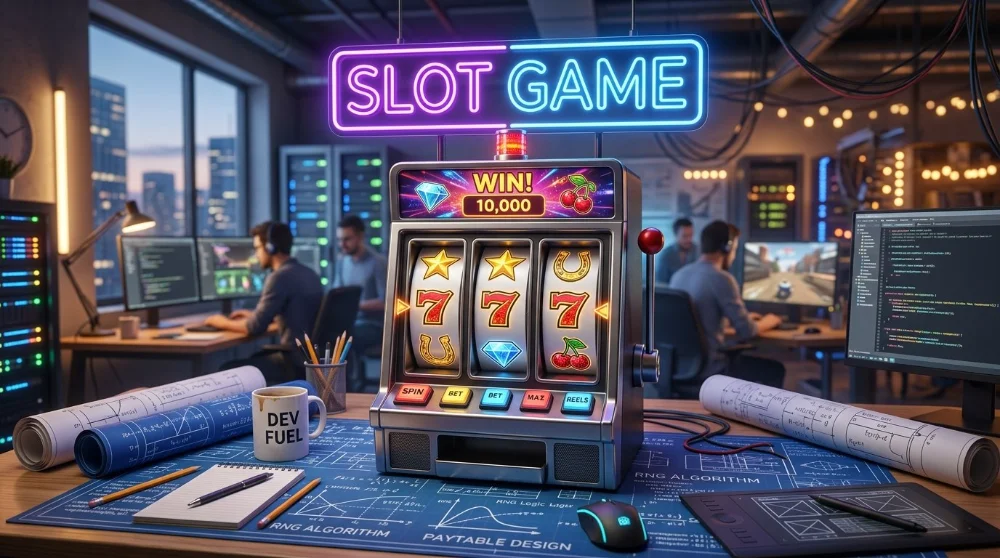
Slot games are the most popular products in online casinos. They are bright, fun, and easy to play. But making a new slot game is not simple. It takes time, skill, and money. Whether you are a game studio or a casino operator looking to create your own game, here is how the process works.

1. Start With an Idea

Every slot game starts with a theme. The theme is what makes players want to try the game.

  • Pick a Topic: Popular themes include ancient Egypt, mythology, adventures, fruits, movies, and TV shows. Think about what players already like.
  • Know Your Audience: A game for young players might use cartoons and bright colors. A game for older players might use classic fruit symbols and simple rules.
  • Check the Market: Look at other slot games. What themes are popular? What themes are missing? Find a gap you can fill.

2. Design the Math Model

The math model is the most important part of a slot game. It decides how the game pays out.

  • RTP (Return to Player): This is the percentage of money the game pays back to players over time. Most slots have an RTP between 92% and 98%. You must decide your number early.
  • Volatility: Low volatility means small wins happen often. High volatility means big wins happen less often. Choose based on what players want.
  • Hit Frequency: How often does a spin win something? This number affects how excited players stay.
  • Paylines: Decide how many ways players can win. Some slots have fixed paylines. Others have hundreds of ways to win.

You need a math expert for this step. They build spreadsheets that prove the game works and pays correctly.

3. Create the Artwork

Once the math is set, artists start designing how the game looks.

  • Symbols: Draw the symbols that appear on the reels. This includes low-value cards and high-value theme symbols.
  • Background: Design the scene behind the reels. A jungle theme needs trees and vines. A space theme needs stars and planets.
  • Animations: Plan how symbols move and react when players win. Good animations make wins feel exciting.
  • User Interface: Design the buttons for spin, bet, and settings. They must be easy to find and use.

4. Add Sound and Music

Sound makes a slot game feel alive. Players expect music and sound effects.

  • Background Music: Pick music that fits the theme. Fast music for action games. Relaxing music for calm games.
  • Win Sounds: Create sounds that play when players win. Big wins need big sounds.
  • Reel Sounds: Add clicks or whooshes when the reels spin.
  • Bonus Sounds: Special sounds for bonus rounds tell players something good is happening.

5. Build the Game Engine

This is where developers write the code that makes the game run.

  • Choose a Platform: Decide if the game will run on desktop, mobile, or both. Most players use phones, so mobile first is smart.
  • Use HTML5: Old games used Flash. Modern games use HTML5. It works on all devices without extra plugins.
  • Random Number Generator: Write or buy an RNG that picks random results for every spin. This must be fair and unpredictable.
  • Reel Logic: Code how the reels stop and how wins are calculated.

6. Add Bonus Features

Players love bonus features. They make the game more fun and offer bigger wins.

  • Free Spins: Give players extra spins without betting more money.
  • Wild Symbols: These symbols replace other symbols to help form wins.
  • Scatter Symbols: These trigger bonuses when enough appear on the reels.
  • Pick Games: Let players choose items to reveal prizes.
  • Multipliers: Multiply wins by 2x, 3x, or more.
  • Gamble Features: After a win, let players gamble to double their money.

7. Test Everything

Before a game goes live, it must be tested. Bugs ruin the player experience.

  • Function Testing: Check that every button works. Spin the reels thousands of times to find errors.
  • Math Testing: Run millions of simulated spins to confirm the RTP and volatility match the design.
  • Device Testing: Test on iPhones, Android phones, tablets, and computers. The game must work everywhere.
  • Browser Testing: Check Chrome, Safari, Firefox, and Edge.

8. Get Certified

Most countries require slot games to be tested by independent labs.

  • Send to Test Labs: Companies like GLI, iTech Labs, or BMM test your game.
  • Check the RNG: They verify that your random number generator is truly random.
  • Check the Math: They confirm that the RTP matches what you claim.
  • Receive a Certificate: Once approved, you get a certificate. Casinos and regulators require this before the game can be used.

9. Integrate With Casinos

Now the game needs to reach players. You must connect it to online casinos.

  • API Integration: Use APIs to connect your game to casino platforms. This lets casinos offer your game to their players.
  • Backend Tools: Set up tools that track player data, bets, and wins. Casinos need reports on how the game performs.
  • Currency Support: Make sure the game works with different currencies and languages.

10. Market the Game

A good game needs players. Marketing helps people find it.

  • Create a Trailer: Make a short video showing the best parts of your game.
  • Write Descriptions: Explain the theme, features, and big win potential.
  • Send to Casinos: Pitch your game to casino operators. Offer free trials so they can test it.
  • Promote on Social Media: Share screenshots and videos on Twitter, LinkedIn, and casino forums.

11. Monitor Performance

After launch, watch how the game does.

  • Player Data: See how many people play and how long they stay.
  • Revenue Reports: Track how much money the game makes.
  • Fix Issues: If players report bugs, fix them fast.
  • Updates: Add new features or improve old ones to keep the game fresh.

The Takeaway

Making a new slot game takes a team of experts: mathematicians, artists, sound designers, and developers. The process takes months and costs money. But a great slot game can make money for years.

If you want to build your own slot game, start with a strong idea and build from there. Test everything. Get certified. Then bring it to players.

Ready to build your game?
Contact us to talk about your slot game idea. We handle design, development, and certification. You focus on launching and marketing.