

The numbers are stark. Online gambling revenue in Ireland passed €1.2 billion in the first quarter of 2026. That is a 47 percent increase from the previous quarter . Meanwhile, physical betting shops saw their turnover drop from €552 million to €276 million over the same period. The market has shifted, and it shifted fast.
We see this every day at Spiralli. Our clients in the sports and betting space come to us with the same problem: their desktop site works fine, but their mobile numbers are weak. Players leave. Registration rates are low. The bounce rate on phones is double what it is on computers.
The cause is simple. Most sports and betting sites were built for desktop screens. They were designed with a mouse and a large monitor in mind. Then they were squeezed down to fit a phone. That approach does not work anymore.
Here is what we have learned about mobile betting in Ireland and how we fix it for our clients.
The Irish Market Has Gone Mobile
The data from Ireland is clear. The Gambling Regulatory Authority of Ireland (GRAI) now oversees a market where online operators outnumber physical bookmakers by more than four to one. There are 66 online operators and just 15 traditional shops left in the country .
The traffic numbers tell the same story. We analysed the top gambling websites in Ireland using Semrush data. The mobile share for most leading sites is between 80 and 90 percent . Some operators are getting 96 percent of their traffic from phones. Only a handful still have a desktop majority.
What is driving this shift? Two things.
First, Irish people use their phones for everything. A Deloitte study found that 96 percent of people in Ireland own a smartphone . That is one of the highest rates in Europe. When everyone has a phone in their pocket, they use it to check scores, place bets, and manage their accounts.
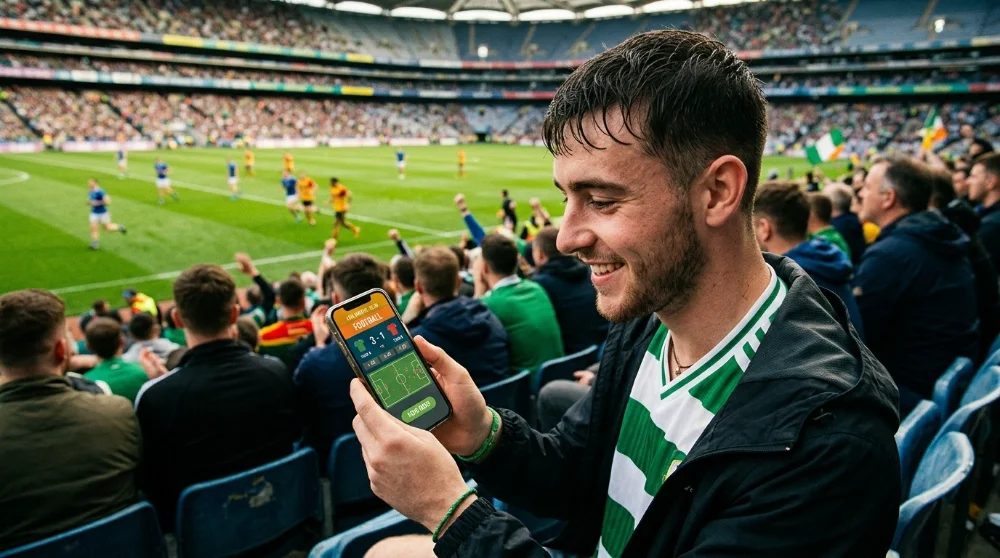
Second, the matchday experience has changed. Fans at live games now use their phones constantly. Over 80 percent of sports fans check their phones while attending live professional events . They check scores from other games, look at stats, and place in-play bets. The phone has become part of the matchday routine.
The shift away from desktop is permanent. Physical betting shops are closing. Desktop traffic is declining. If your site is not optimised for mobile, you are losing customers.
What Mobile Users Actually Need
A mobile betting experience is different from a desktop experience. The screen is smaller. The user is often in a hurry. They might be at a game, on a bus, or watching TV. They want to place a bet quickly and get back to what they were doing.
Based on our work with Irish sports and betting clients, we have identified five things mobile users need above all else.
Speed. Mobile users have zero patience. If a page takes more than three seconds to load, they leave. This is not an opinion. We have seen the data across dozens of sites. The bounce rate triples when load time goes from one second to three seconds.
Large touch targets. Buttons need to be big enough to tap with a thumb. We see sites all the time with buttons that are too small. Users miss them, get frustrated, and leave. The minimum size for a tappable area on mobile is 44 by 44 pixels. We aim for bigger.
Simple navigation. Menus that work on desktop often fail on mobile. Drop-downs are hard to use with a finger. Hamburger menus hide important options. We design navigation that puts the most important actions – bet slip, account, promotions – within easy reach.
Clear bet slip. The bet slip is the most important element on any betting site. On mobile, it needs to be visible and easy to use. Users need to see their selections, change stakes, and confirm bets without scrolling or zooming.
Fast registration. Sign-up flows that work on desktop are often too long for mobile. Users will not fill out a ten-field form on a phone. We shorten registration to the absolute minimum and use social logins where possible.
Common Mobile Mistakes We See
We audit a lot of sports and betting sites. Most have the same problems on mobile.
Small buttons and links. This is the most common issue. We see sites where the “Place Bet” button is the size of a fingernail. Users tap it, miss, and tap again. Each missed tap increases frustration and reduces the chance of conversion.
Poorly sized images. Some sites serve desktop-sized images to mobile devices. These take too long to load and waste data. We use responsive images that adjust to the screen size.
Hidden navigation. Hamburger menus hide important options. Users have to tap twice to get anywhere. We prefer visible navigation with the most important items shown at the bottom of the screen.
Complicated registration. We see registration forms with ten or more fields. Mobile users abandon these. We reduce forms to the essentials: name, email, password, and date of birth. Everything else comes later.
No touch optimisation. Some sites still use hover effects that work on desktop but do nothing on mobile. The interface feels broken. We design for touch first and add mouse support later.
The PWA Alternative
Many betting operators think they need a native app. They spend money on iOS and Android development. They deal with app store approvals. They pay commissions on every transaction.
There is a better way. Progressive Web Apps (PWAs) are mobile websites that behave like native apps . They load fast, work offline, and can be added to the home screen. They send push notifications and run at near-native speeds.
Here is why PWAs work better for betting and casino sites.
No app store gatekeepers. The major app stores have become difficult for gambling operators. Google and Apple enforce strict rules. Getting approved takes time. Getting rejected costs money. A PWA bypasses all of that .
Lower costs. Building a native app requires separate development for iOS and Android. A PWA works across both platforms with one codebase. Maintenance costs are lower. Updates are instant.
Direct user acquisition. Users find PWAs through search, social media, or direct links. There is no app store listing to compete on. You control your own distribution .
Faster updates. When you need to update odds, add a promotion, or fix a bug, you can do it instantly. There is no app store review process. Changes go live as soon as you deploy them.
Push notifications. PWAs support push notifications on both iOS and Android. You can re-engage users without needing a native app.
Some of the biggest names in the industry are moving to PWAs. Smaller operators are launching PWA-first because they never built a desktop site in the first place . The performance gap between PWAs and native apps has closed. For betting and casino use cases, the difference is negligible.
What We Do for Our Clients
At Spiralli, we have built mobile-first sports and betting sites for Irish operators. Here is our approach.
We start with mobile. We design for the smallest screen first. Then we expand to tablets and desktops. This forces us to make good decisions about what matters most.
We test on real devices. Emulators are not enough. We test on actual phones and tablets. We use low-end devices as well as high-end ones. If the site works on a three-year-old Android phone, it will work on anything.
We optimise images. Large images are the biggest cause of slow loading times. We compress everything. We use WebP format where possible. We lazy load images that are not immediately visible.
We simplify registration. We work with our clients to strip down their sign-up flows. We remove unnecessary fields. We add social login options like Google and Facebook.
We build PWA features. Our sites include service workers for offline support. We add manifest files so users can add the site to their home screen. We set up push notifications for re-engagement.
We monitor performance. We use tools like Lighthouse and WebPageTest to track performance. We set targets for First Contentful Paint and Largest Contentful Paint. We fix issues as soon as they appear.
The Cost of Getting It Wrong
We have seen the damage that poor mobile experiences cause. One client had 70 percent of their traffic coming from mobile but only 30 percent of their revenue. Users were visiting the site but not converting. We rebuilt the mobile experience. Within three months, mobile revenue had doubled.
Another client was losing users during registration. The sign-up form was too long and did not work well on phones. We shortened the form and optimised the flow. Registration conversion increased by 27 percent.
These results are not unusual. We see them consistently when we fix mobile issues. The investment is modest. The return is significant.
What You Should Do Next
If you run a sports or betting site in Ireland, look at your mobile numbers. Check your bounce rate on phones. Look at your conversion rate on mobile versus desktop. If mobile lags, you have a problem.
Start with a mobile audit. Load your site on a phone and try to place a bet. Time how long it takes. Count how many taps you need. Note any friction points.
Then fix the biggest issues first. Speed is the priority. Compress images and simplify code. Then work on the user interface. Make buttons bigger. Simplify navigation. Shorten registration.
Consider a PWA. If you are building a new site or redesigning an existing one, build it as a PWA from the start. The benefits outweigh the costs.
The market has moved. Irish bettors are on their phones. They will not wait for your desktop site to load. They will not struggle with small buttons. They will go to a competitor that works on their device.
We help clients make this shift every week. We know what works in the Irish market. We know the technical requirements and the user expectations.
Contact us if you want to talk about your mobile experience. We will audit your site, identify the problems, and show you how to fix them. Your players are waiting.